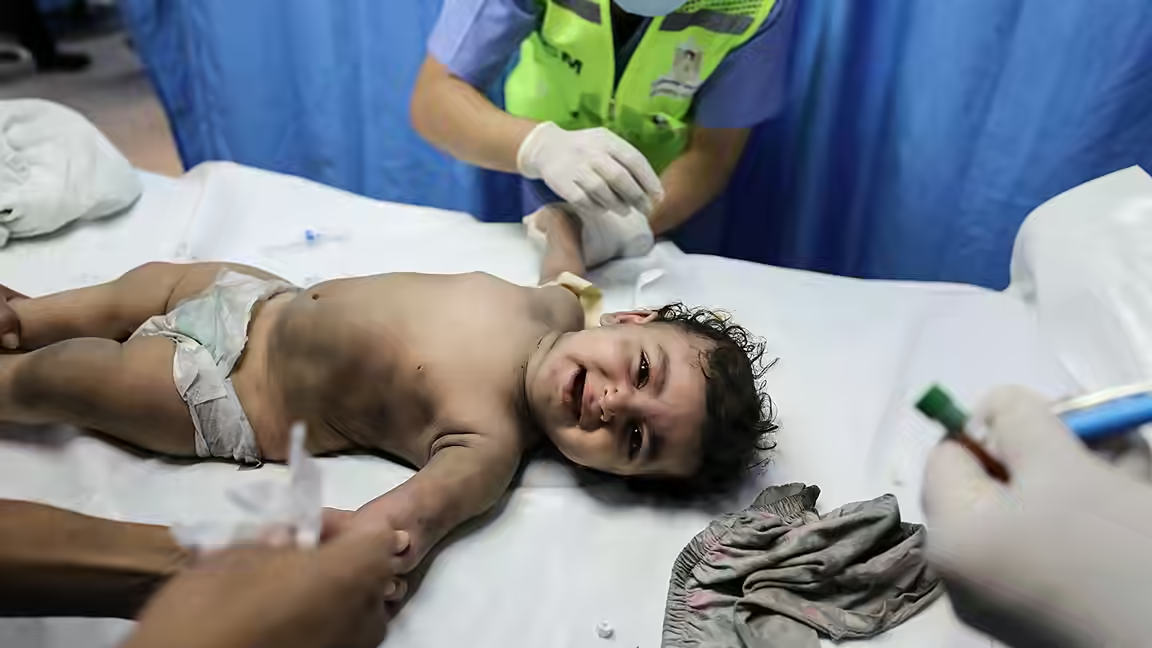
Iranian officials accused the United States of bombing a house during a wedding celebration in the southern county of Sirik, saying the strike killed at least five people, including a child, and wounded 63 others.
Esmaeil Baghaei, spokesman for Iran's foreign ministry, said the attack hit a residence in Kuhestak early on Wednesday and described it as brutal. Iran's Press TV reported that at least five people were killed. Hossein Kermanpour, an official at Iran's health ministry, wrote on X that the martyrs included a child and that electricity and telephone lines were cut off. Later, the governor of Sirik county, Reza Shahidiyan, told state broadcaster IRIB that 63 people were wounded, 50 of them women and children, and that all of the injured were taken to a hospital in nearby Minab and were in stable condition. The casualty figures were presented by Iranian officials and state-linked outlets, not independently confirmed in the packet.
Iranian state-linked outlets also showed the aftermath of the blast. The Red Crescent published footage of a building with blown-out walls and windows, along with images of children receiving treatment in hospital. Fars news agency published an account from a child survivor who said he heard fighter jets before the explosion and described bricks, stones and cement hitting him in the face and head. The child said the people present were ordinary civilians. Those details gave the Iranian account a human scale, but they remained part of a broader information battle around a fast-moving conflict.
The accusation came as the US military announced a new wave of strikes against Iranian military targets, saying they followed attempted attacks by the Islamic Revolutionary Guard Corps against commercial shipping in the Strait of Hormuz. Washington said it had hit air defence sites, radar systems, maritime assets, mine-laying capabilities and communications sites. The source did not verify the competing claims, but it showed how quickly the conflict around the Gulf had widened into a cycle of attack and retaliation. The same report said the US action followed a weekend exchange of fire and came amid a continuing standoff over the Strait of Hormuz.
Iranian officials framed the reported wedding-party strike as part of a broader pattern of violence. Baghaei said the attack could not be separated from earlier strikes on Minab and Lamerd, and he called on governments and international institutions to respond. He said Iran would answer what he called savage crimes with firmness and warned that silence in the face of such acts was not neutrality. The report also said Iran retaliated by attacking US bases and assets in Jordan, Bahrain and Iraq, while Kuwait reported intercepting drones and missiles.
Separate reports from the Iranian side said explosions were heard in several coastal cities, including Konarak, Bandar Abbas, Jask, Asaluyeh and Ahvaz, as well as on Qeshm Island. For now, the wedding-party blast remains an allegation from Iranian officials and state-linked outlets, but the casualty claims and the wider retaliation cycle underscore how the confrontation has spread beyond a single strike and into a broader regional crisis around the Gulf.